Ben Uri collection
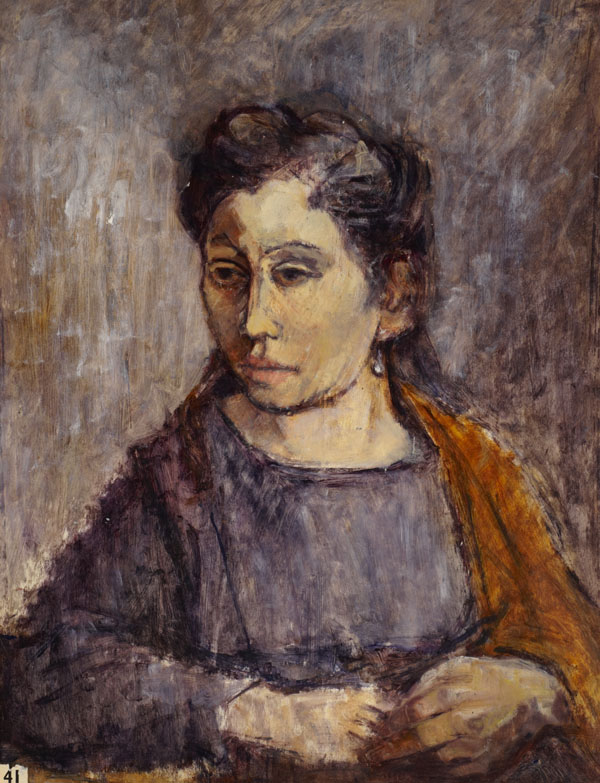
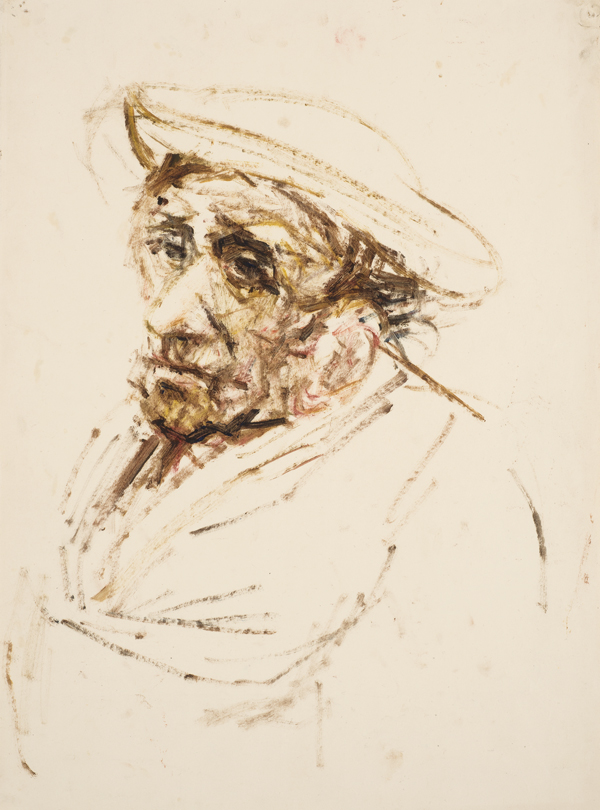
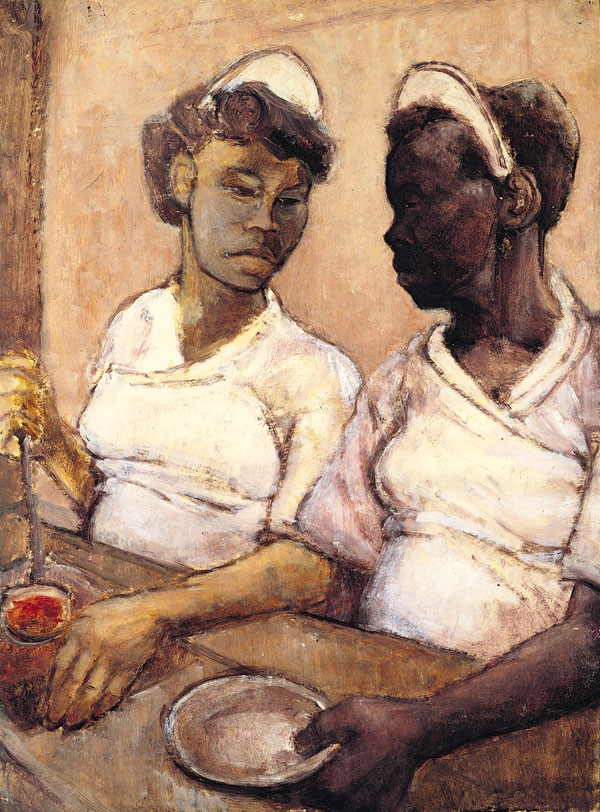
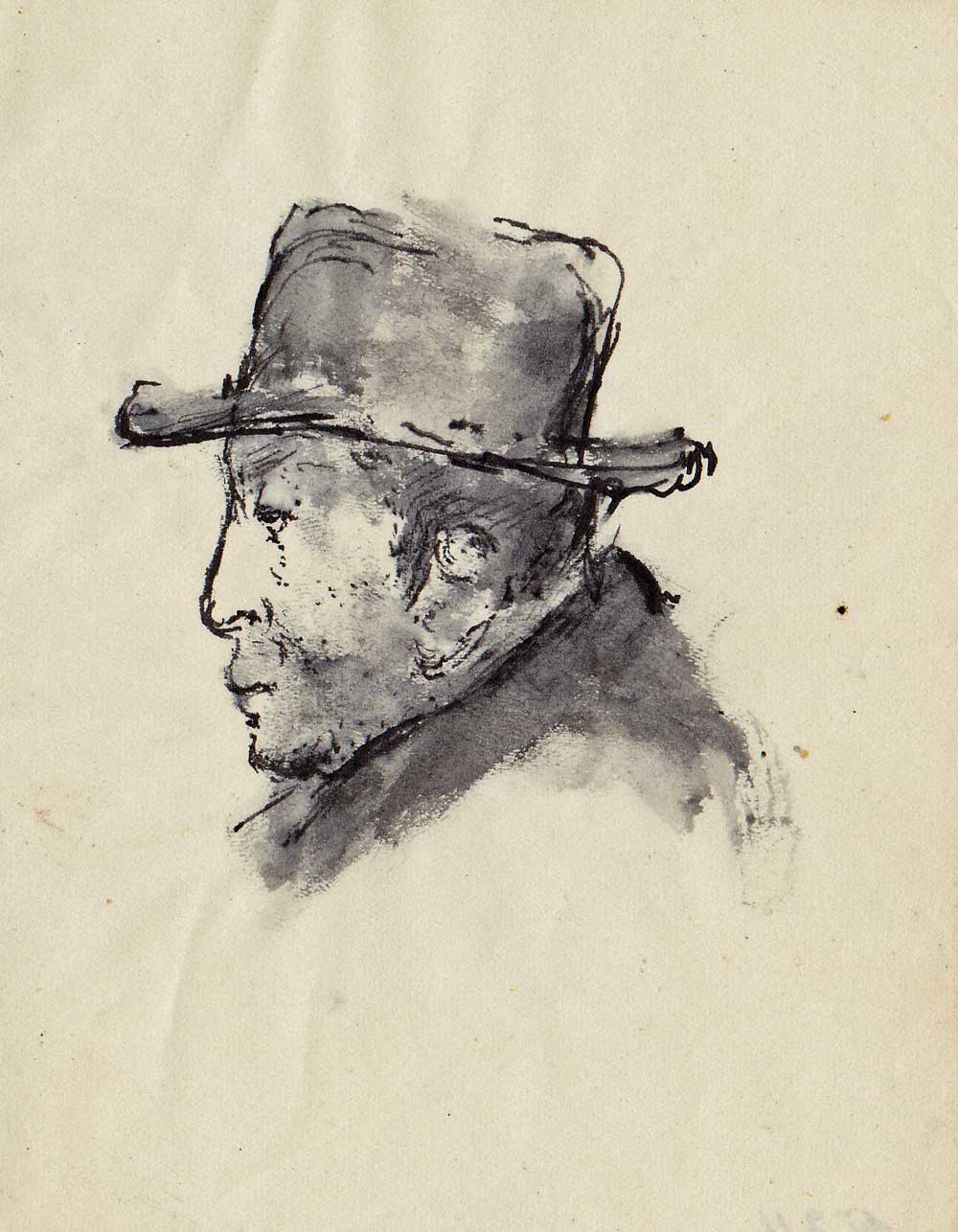
Work by Eva Frankfurther
Biography
Eva Frankfurther was born into a cultured, assimilated Jewish family in Berlin, Germany on 10 February 1930. Following the rise of National Socialism in Germany, she escaped to London with her siblings (her father and stepmother followed a few months later) in 1939 and the family settled in Belsize Park. In the early 1940s she was enrolled at South Hampstead Girls School, with her older sister, Beate, and both were evacuated to Berkhamsted during the Blitz. After the war, she studied at St Martin's School of Art (1946-51), where her fellow students included Leon Kossoff and Frank Auerbach, who recalled Frankfurther's 'contempt for professional tricks or gloss' and her work as 'full of feeling for people' (cited M. Bohm Duchen, in ed., B. Planskoy, 'Eva Frankfurther 1930-59: Paintings, lithographs and drawings, London: Peter Halban, 2001). She exhibited alongside her contemporaries in the Seventh Exhibition of Paintings, Lithographs & Sculpture by Students of St Martin's School of Art at the Coffee House Gallery, Leicester Square (c. 1949-51).
Disaffected with the London art scene, after graduating, she moved to Whitechapel. For the next six years, she earned her living working the evening shift as a counter-hand at Lyons Corner House and, later, in a sugar refinery, leaving herself free to paint during the day. Inspired by artists as diverse as Rembrandt, Käthe Kollwitz and Picasso, she took as her principal subject the ethnically diverse, largely immigrant population among whom she lived and worked. 'West Indian, Irish, Cypriot and Pakistani immigrants, English whom the Welfare State had passed by, these were the people amongst whom I lived and made some of my best friends', she observed. 'My colleagues and teachers were painters concerned with form and colour, while to me these were only means to an end, the understanding of and commenting on people.' Although she avoided the art establishment, she participated regularly in the East End Academy’s annual exhibitions at the Whitechapel Art Gallery (1952–57) and in the Tercentenary Exhibition of Contemporary Anglo-Jewish Artists at Ben Uri Gallery in 1956. Between 1948 and 1958 she also travelled extensively in Europe and in her last year, spent eight months living and working in Israel. She returned to London in October 1958; suffering from depression, she took her own life in January 1959.
In 1962 a posthumous retrospective was held at Ben Uri Gallery in London, followed by further solo shows at Clare College, Cambridge (1979), Bedford Central Library (1980), Margaret Fisher Gallery (1981), and a memorial exhibition at the Boundary Gallery (2001), curated by her sister, Beate Planskoy, and Agi Katz. She has been the focus of two further exhibitions at Ben Uri Gallery, ‘Refiguring the 50s: Joan Eardley, Sheila Fell, Eva Frankfurther, Josef Herman and L S Lowry’ (2014), showing the artist in the context of her peers, and ‘Refugees: The Lives of Others’ (2017), launching a dedicated website to the artist. Her work has also been included in numerous mixed exhibitions including ‘Kunst im Exil in Grossbritannien 1933-45’ (Berlin, 1986), ‘Postwar Modern’ (Barbican, London, 2022) and 'London Calling' (Kunstmuseum Den Haag, Netherlands, 2026). In 2026 her first solo German show was mounted at the Kunstmuseum, Dahlem, Berlin.
Eva Frankfurther’s work is in UK collections including the Ben Uri Collection; Clare College, University of Cambridge; The Women's Art Collection, Murray Edwards, University of Cambridge and South Hampstead Girls School, as well as private collections in the UK and abroad, including the Jewish Museum Berlin.
Find out more at our website dedicated to the work of Eva FrankfurtherSearch Ben Uri archive for more information about Eva Frankfurther
Artist keywords
Berlin | expressionism | Germany | Hitler émigré | Jewish | painter | St Martin's School of Art | Whitechapel | woman artist
6 work/s by this artist from the collection are shown below. For a more detailed record and image please click on the link.