Ben Uri Pre-Eminent Collection

The Breakfast Table
Artist information
Name Solomon J Solomon (1860-1927)
Born London, England
Died Birchington, Kent, England
Find more work in the collection by this artist
Find out more about this artist
Painter Solomon Joseph Solomon was born into a Jewish family in London, England on 16 September 1860 (his younger sister was the painter Lily Delissa Joseph). He studied in London at Heatherley's Art School (1876) and then at the Royal Academy schools in Paris (under Alexandre Cabanel) and in Munich. After concluding his studies, he travelled widely in Italy, Spain and North Africa, before re-settling in London, where, as a tutor at the Royal Academy, his pupils included the young Alfred Wolmark, J H Amshewitz and Samuel Rahamin Samuel (later Samuel Fyzee-Rahamin). During the 1890s he had a studio on Holland Park Road and was part of the Holland Park circle of artists that sprung up around Leighton House in the late 19th century. In 1897 Solomon married, and both his wife, Ella, who often laid out his colours for him, and their three children often posed as his models. He painted numerous informal pictures of his own family life and ‘wedding portraits’ of his relatives.
Celebrated for his historical and biblical works, as well as his society portraiture, in 1906 he became only the second Jewish Royal Academician (his contributions to the annual RA exhibition were hung in what came to be known as Solomon’s corner) and President of the Royal Society of British Artists. An extremely influential figure in Jewish circles, he was a founder and the first President of the Jewish cultural and philanthropic organisation known as the Maccabeans and the main art adviser to its offshoot, the Jewish Education Aid Society, which assisted many of the so-called 'Whitechapel Boys'. His book, ‘The Practice of Oil Painting’, was published in 1910, serving as a guide for both art students and teachers. Solomon also pioneered the technique of camouflage for tanks and army equipment during the First World War, writing the book 'Strategic Camouflage' (published in 1920), as a Lieutenant-Colonel in the Royal Engineers. His camouflage system was subsequently used in the Second World War. He also designed a stained-glass window for the Hampstead Synagogue. Solomon was the second President of the Ben Uri Art Society from 1924–26 (succeeding Israel Zangwill). He died at his home at Birchington, Kent, England on 27 July 1927. His work is represented in UK collections including the British Academy, the Imperial War Museum, Leighton House, the Museum of London, Tate and the Walker Art Gallery. In 1956 he was included in the Tercentenary Exhibition of Jewish Artists in England 1656-1956 at the Whitechapel Art Gallery.
Object Details
Date 1921
Object type painting
Medium oil on canvas
Materials and techniques oil (medium) painting (technique) canvas (support)
Unframed 69 x 50.5 cm
Framed 83 x 64.5 cm
Signed (lower left): S S
Acquisition a bequest of Mrs Margaret Manser (the artist's grand-daughter) 2002
Accession number 2002-90
Display status not on display
Solomon’s richly-decorated interior of the family bungalow at Birchington, Kent (where his brother-in-law Delissa Joseph, had built him a second studio) depicts his wife, Ella, and youngest daughter, Iris (later the Hon. Mrs. Ewen Montagu), in the comfortable intimacy of the breakfast room. Iris is denoted only by her hand holding the newspaper and her dangling leg with its fashionable shoe. On the wall behind a selection of paintings by Solomon includes one of his older daughter, Mary, on her pony (now Ben Uri Collection); the landscape is by another painter. Solomon’s tasteful and opulent breakfast room reveals the extent of his identification with English life; the only reference to his Jewish origins is the two candlesticks upon the mantelpiece. In 1956 a portrait of Ella was included in the Tercentenary Exhibition of Jewish Artists in England 1656-1956 at the Whitechapel Art Gallery.
The Ben Uri Collection features six works by Solomon, including the magnificent portrait of Mary, The Field: The Artist’s Daughter on a Pony, which was presented by his widow in 1937.
Keywords
Selected exhibition history
1990
Solomon J. Solomon RA
Ben Uri Art Gallery
2003
Director's Choice: Highlights from the Ben Uri Permanent Collection
Ben Uri Gallery - The London Jewish Museum of Art
2006
Recent Acquisitions 2001-2006
Ben Uri Gallery - The London Jewish Museum of Art
2010
Apocalypse: unveiling a lost masterpiece by Marc Chagall and 50 selected masterworks from the Ben Uri Collection
Osborne Samuel
2015
Out of Chaos – Ben Uri: 100 Years in London
Somerset House
2018
Exodus: masterworks from the Ben Uri Collection
Bushey Museum
2018
Acquisitions and Long-Term Loan Highlights Since 2001
Ben Uri Gallery
2025
Ben Uri 110/25: From Local to Global
Ben Uri Gallery
Literature
Rachel Dickson and Sarah MacDougall, eds., 'Out of Chaos: Ben Uri; 100 Years in London' (London: Ben Uri Gallery, 2015) pp. 58-59; Oil Paintings in Public Ownership in Camden (London: The Public Catalogue Foundation, 2013) p. 39; David Glasser, intro., 'Recent Acquisitions 2001-2006' (London: Ben Uri Gallery, 2006), p. 11 (illus. included); Solomon J Soloman RA (London: Ben Uri Gallery, 1990).
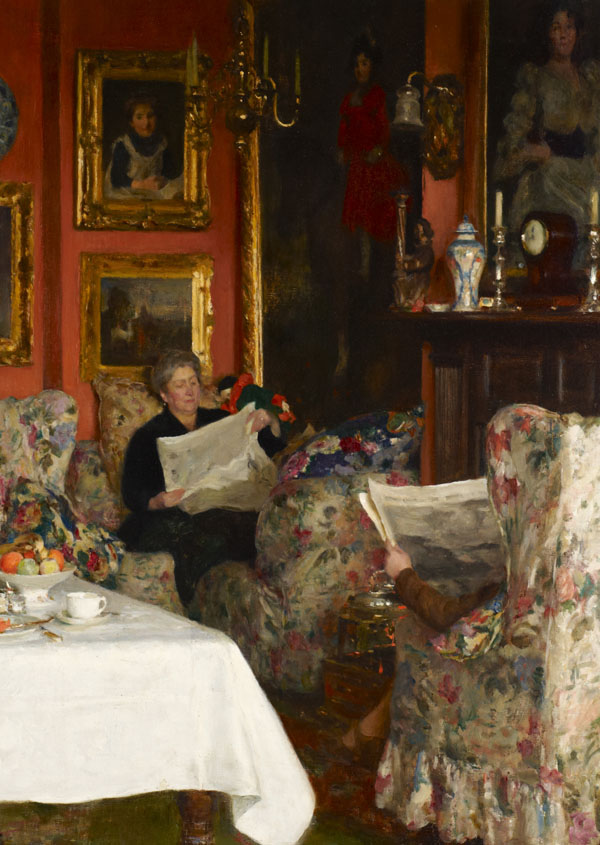
Hover mouse cursor over image to zoom (you can also use the mouse wheel).
To license this image contact Bridgeman images
Related works
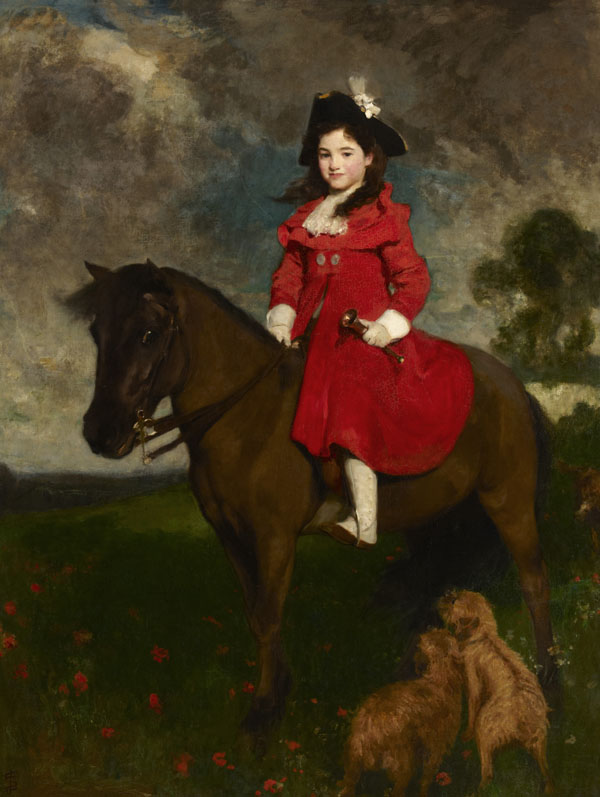
The Field, the Artist's Daughter on a Pony
by Solomon J Solomon
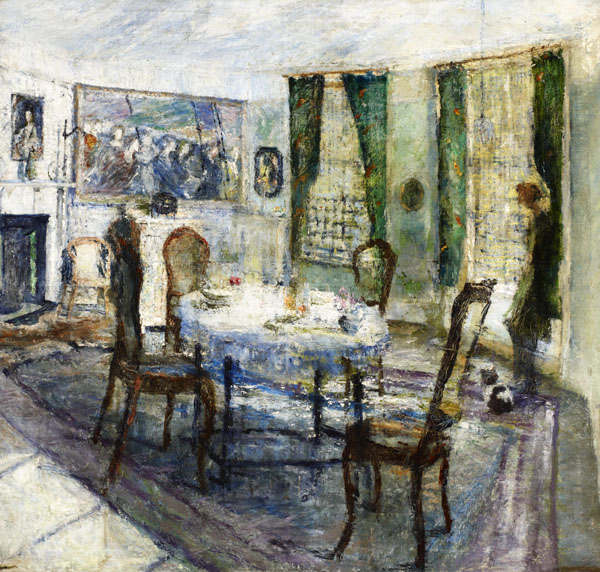
Teatime, Birchington
by Lily Delissa Joseph