Ben Uri Pre-Eminent Collection

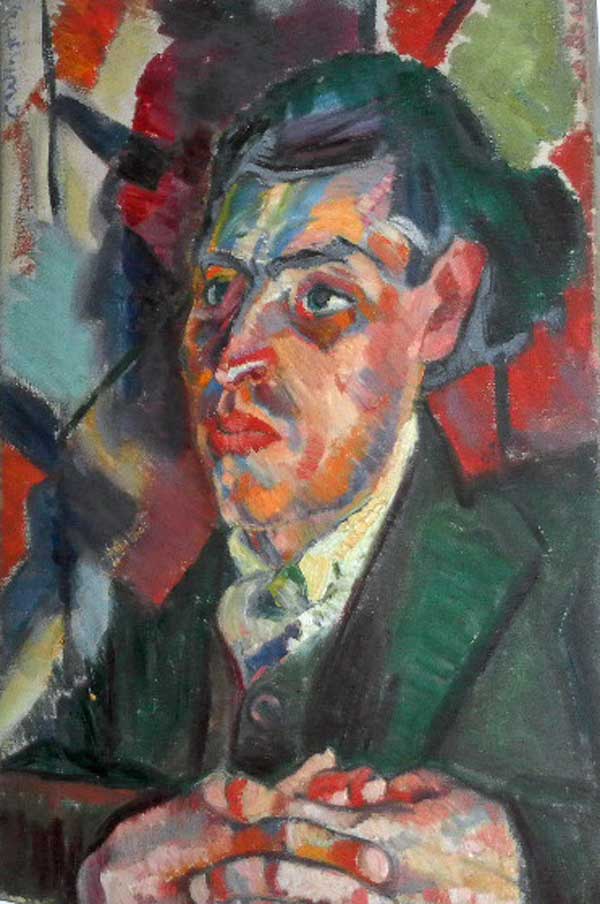
Portrait of Joseph Leftwich
Artist information
Name Clare Winsten (1892-1989)
Other name Clara Birnberg, C B Winsten
Born Romania
Died Abberton near Colchester, England
Find more work in the collection by this artist
Find out more about this artist
Painter and sculptor Clare Winsten (née Clara Birnberg) was born to Galician Jewish parents in Romania on 10 August 1892, and later immigrated to England with her family c. 1902. She was a member of the Women’s Freedom League, as well as the only girl among the so-called 'Whitechapel boys', a group of artists and poets linked through the East End Jewish community centred around Whitechapel and Stepney. The latter included her future husband Stephen Winsten (formerly Samuel ‘Simy’ Weinstein), the poet/publisher John ‘Jimmy’ Rodker, and Joseph Leftwich (who coined the name), as well as the painter/poet Isaac Rosenberg and painters Mark Gertler and David Bomberg, whom she studied alongside at the Slade School of Fine Art. Her work was included in the ‘Jewish Section’ co-curated by Bomberg and Jacob Epstein as part of the Whitechapel Art Gallery’s ‘Twentieth-Century Art: A Review of Modern Movements’ in 1914, although she also showed more innovative work outside this section. Bomberg, with whom she afterwards fell out, painted her and she and Rosenberg created reciprocal portraits.
During the First World War, the Winstens, were Pacifists, Conscientious Objectors and members of the 'No Conscription' fellowship. They married in 1916 and in November of the same year, Stephen Winsten undertook the first of three consecutive terms of imprisonment for his beliefs. Postwar both worked on humanitarian causes and became Quaker Humanists. Stephen Winsten published a book of poems ‘Chains’ (1920), for which Clare produced a number of (unpublished) illustrations, based on his prison experience. Clare Winsten's output included drawings (including a sequence on Oscar Wilde's 'Ballad of Reading Gaol'), paintings and sculpture including a commission for Toynbee Hall, and several of George Bernard Shaw, their neighbour at Ayot St Lawrence, Hertfordshire, in the late 1940s, about whom Stephen wrote a number of books.
Clare Winsten died in Abberton, near Colchester, England in 1989. Her work is held in UK collections including the Ben Uri Collection, the British Museum, the National Portrait Gallery, UCL and the Harry Ransom Humanities Research Centre, University of Texas at Austin. A gift left to UCL in Winsten’s will established her eponymous prize for female artists in order to support them in their early career development.
Object Details
Date c. 1919
Object type painting
Medium oil on canvas
Materials and techniques oil (medium) painting (technique) canvas (support)
Unframed 40 x 24.3 cm
Framed 50 x 34.4 cm
Signed (upper left): 'C. Winsten' and inscribed (verso)
Acquisition Purchased in 2015 with the kind assistance of the ACE/ V&A Purchase Grant Fund, Art Fund and Michael and Brenda Joseph
Accession number 2015-21
Display status not on display
Jewish writer, critic and Yiddish translator Joseph Leftwich (1892–1983) was one of the founding ‘Whitechapel boys’. Born Joseph Lefkowich to Polish-Jewish parents in Holland, he was raised in Germany until the age of seven when the family emigrated to Whitechapel. Leftwich initially worked as a furrier, afterwards writing for the Yiddish daily, Di Tsayt, and becoming a founding member of the Whitechapel writers’ group, which included Isaac Rosenberg, John Rodker and Clare Winsten’s future husband, Simy Weinstein. Leftwich’s 1911 diary (Tower Hamlets Local History Library) is the foremost document on the history of the Whitechapel boys, now best-known for its artist members, particularly David Bomberg and Mark Gertler. Leftwich was also closely associated with the Ben Uri for many years.
Winsten’s portrait of Leftwich with its bold palette, sharp edges and fractured surface, shows the influence of post-Impressionism and her awareness and absorption of contemporaneous art movements, particularly Vorticism. It is not known whether the portrait was painted in Winsten’s studio or Leftwich’s home, however, the backdrop, with its freely painted areas of bold colour, outlined with thick, black lines, may feature the red-green colourway version of Vanessa Bell’s Maud fabric (we are grateful to Cathy Linacre for this suggestion). Developed for the Omega Workshops (1913–19) artists’ collective founded by Roger Fry, the Maud fabric (named after Omega patron, Lady Maud Cunard) was conceived in Bell’s abstract period, c. 1913, and features a similar repeating abstract geometric design.
Keywords
man | Maud fabric | Omega Workshops | poet | Vanessa Bell | Vorticism | Whitechapel boy
Selected exhibition history
2015
Out of Chaos – Ben Uri: 100 Years in London
Somerset House
2018
Acquisitions and Long-Term Loan Highlights Since 2001
Ben Uri Gallery
2019
Migrations: masterworks from the Ben Uri Collection
Gloucester Museum
2024
The Decorative Fair
Evolution London
2024
US: From There to Here - Britain's Gain
Ben Uri Gallery and Museum
Literature
Sarah MacDougall (foreword), Important Additions to the Collection since 2000 (London: Ben Uri Gallery and Museum, 2025), p. 7, illus., p. 46 ; Sarah MacDougall, A newly-discovered portrait of Joseph Leftwich by ‘Whitechapel Girl’ Clare Winsten, c.1919, Understanding British Portraits (blog), December 14th, 2016; Rachel Dickson and Sarah MacDougall, eds., 'Out of Chaos: Ben Uri; 100 Years in London' (London: Ben Uri Gallery, 2015) pp. 52-53.
Hover mouse cursor over image to zoom (you can also use the mouse wheel).
Related works
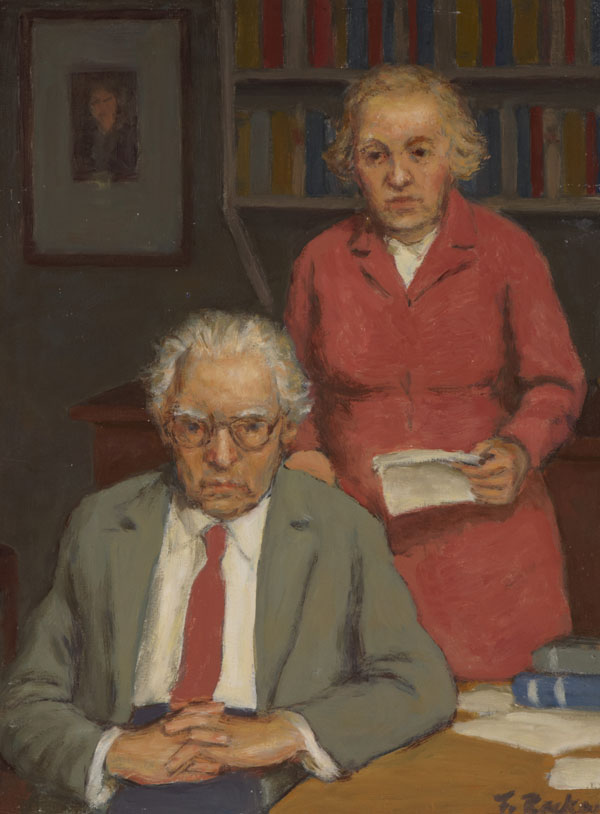
Portrait of Mr and Mrs Joseph Leftwich
by Fermin Rocker
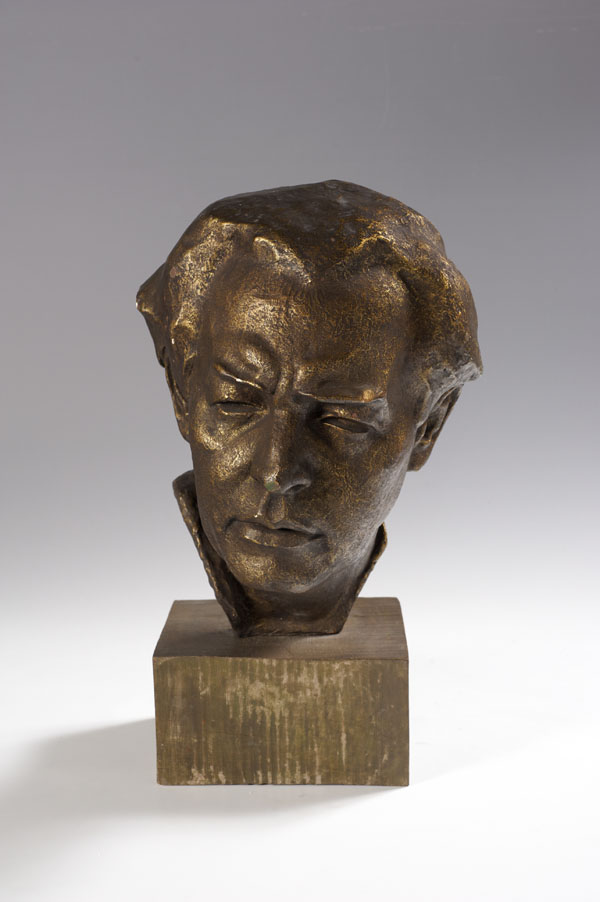
Head of Joseph Leftwich
by Max Sokol