Ben Uri collection
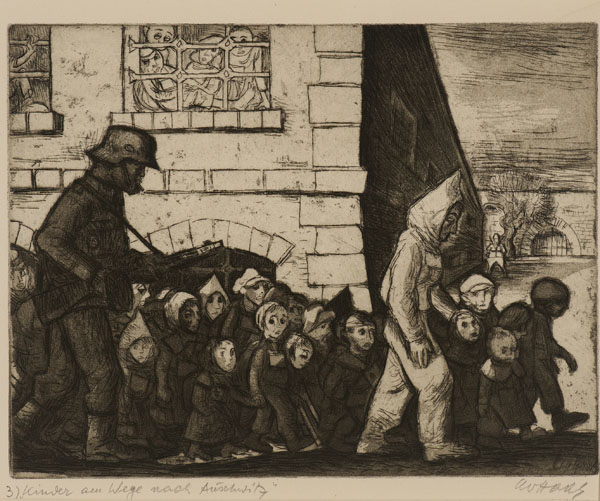
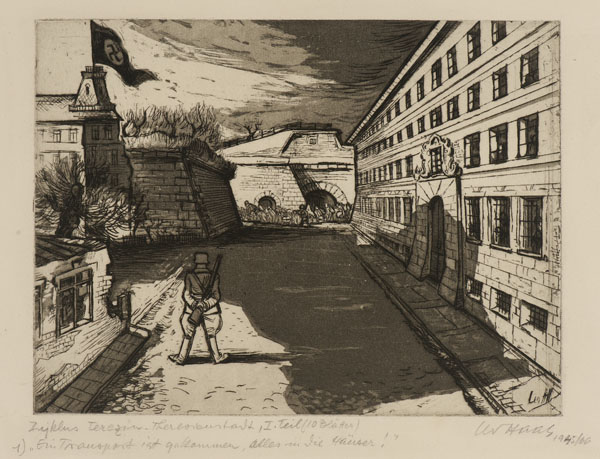
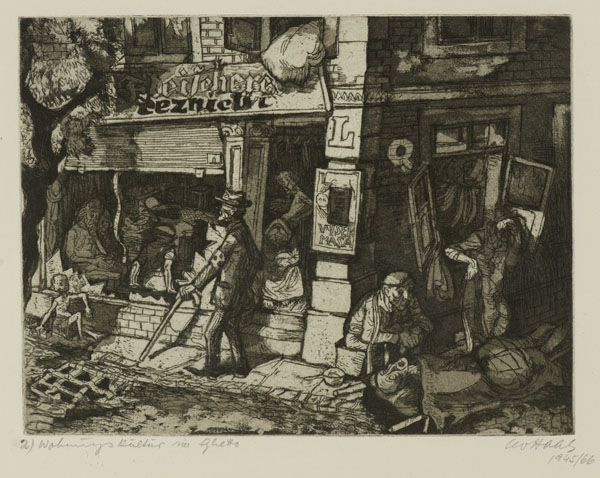
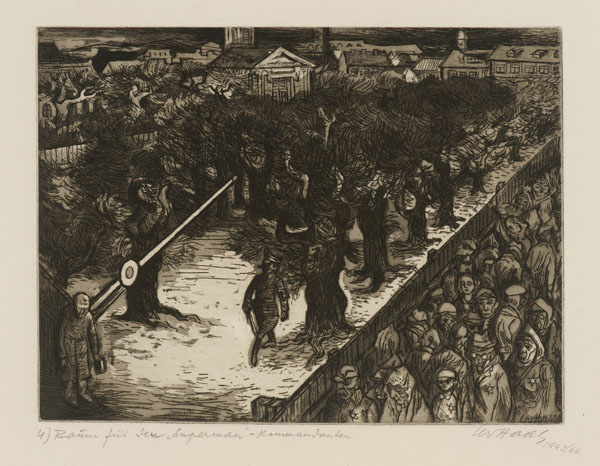
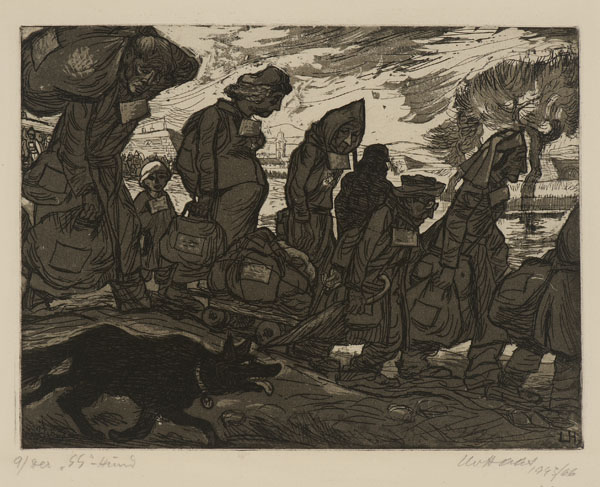
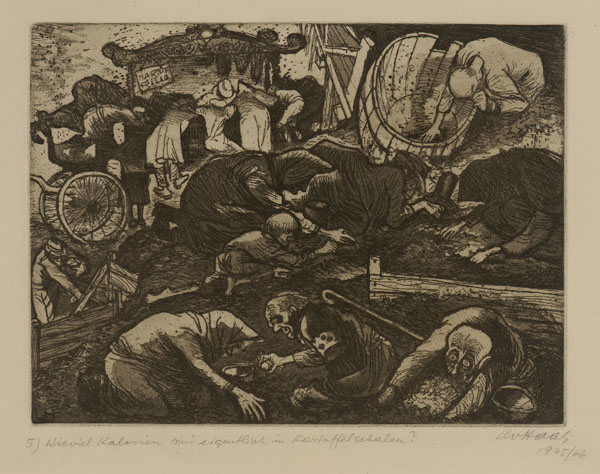
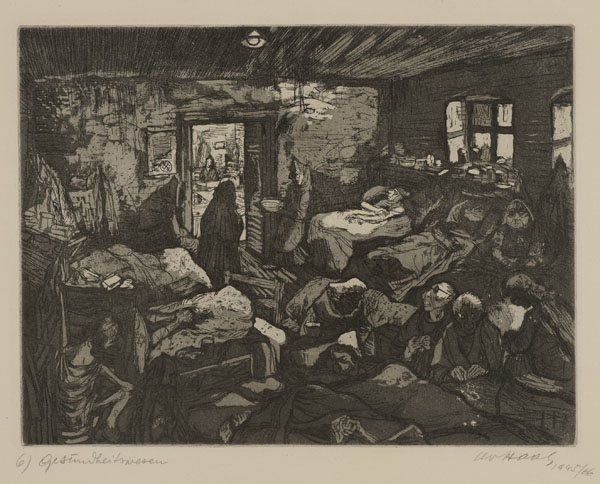
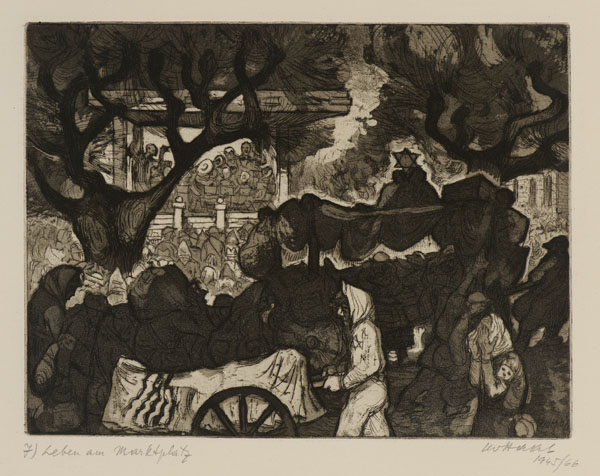
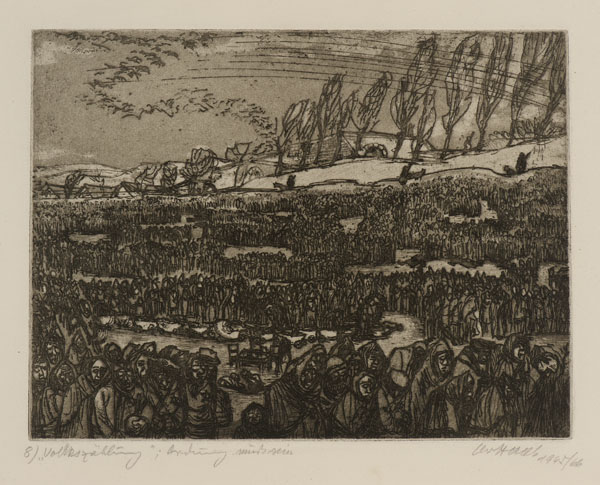
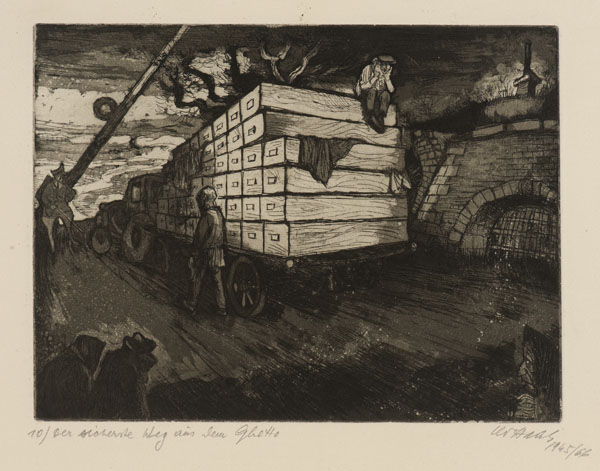
Work by Leo Haas / Series Terezín-Theresienstadt
Biography of artist
Painter, graphic artist, draughtsman and caricaturist Leo Haas was born into a Jewish family in Opava, Czechoslovakia (now Czech Republic) on 15 April 1901. He studied art at the State Academy of Fine Arts in Karlsruhe (1919-22) and then in Berlin under teachers including Emil Orlik. He was influenced by German expressionism and the works of Goya and Toulouse-Lautrec. From 1925–38 he worked in Vienna and Opava as an illustrator, painter and book-designer. He was arrested in 1939 for helping German communists to cross the border illegally and sent into forced labour. In September 1942, Haas was deported to the Theresienstadt (Terezin) ghetto, located in the main fortress of the town in northwest Bohemia. In advance of a high profile visit by the International Red Cross in June 1944, the ghetto was to be recreated as a so-called 'model' community housing middle-class Jews, and to be used for propaganda purposes by the Nazis. Noted for its rich cultural life, the ghetto falsely presented a positive impression to the visiting delegation which only saw pleasant surroundings, a children's opera, freshly painted, uncrowded accommodation, and fake cafés and shops. In reality, about a quarter of the mainly Czech Jewish inmates died in the terrible conditions and many others were deported to extermination camps in the East. As an artist, Haas was assigned to the Technical Department to illustrate propaganda material. However, this also enabled him to secretly record the true conditions in the ghetto, creating over 400 drawings inspired by real and terrible events. Following the Red Cross visit, Haas and his fellow artists were accused of smuggling out 'gruesome' art, arrested and tortured. In October 1944 Haas was transported to Auschwitz and a month later to Sachsenhausen, where he was assigned to counterfeiting currency as part of 'Operation Bernhard', a scheme to destabilize the British economy. In February 1945, the counterfeiters were transported to Mathausen and then to Ebensee, where they were finally liberated by the Americans. After the war, Haas returned to Terezín, where he retrieved some 400 of his hidden artworks. Settling in Prague he worked as a newspaper editor and caricaturist, was reunited with his wife and adopted the son of his friend Bedrich Fritta (also an artist imprisoned in Terezin), who had died in Auschwitz. Haas moved to East Berlin in 1955 as a university art professor and also worked in the film industry. Leo Haas died in Berlin, Germany on 13 August 1983. His work is in UK collections including the Ben Uri Collection and the Fitzwilliam Museum.
10 works in this series are shown below. For a more detailed record and image please click on the link.