Ben Uri Collection

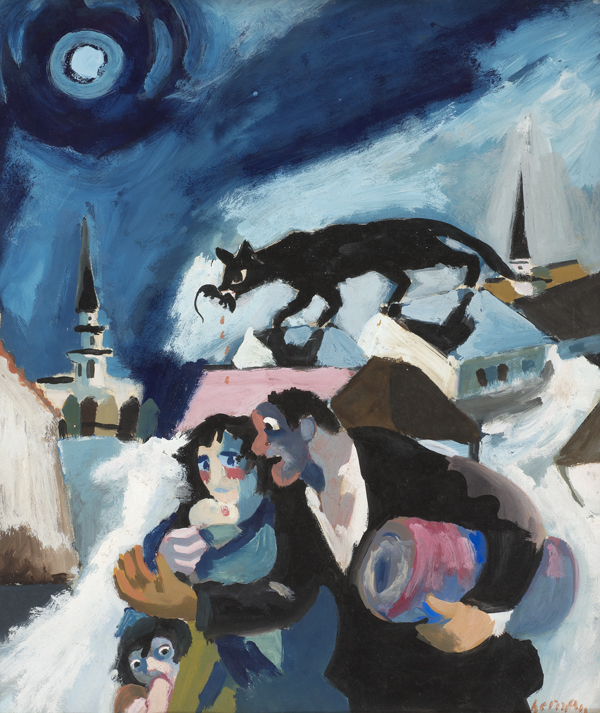
Refugees
Artist information
Name Orovida (1893-1968)
Other name Orovida Camille Pissarro
Born Epping, England
Died London, England
Find more work in the collection by this artist
Find out more about this artist
Orovida (née Orovida Camille Pissarro) was a second generation émigrée, born into an assimilated Jewish family in Epping, Essex, England on 8 October 1893. A member of the distinguished Pissarro painting dynasty, she was the only daughter of the landscape painter, printmaker, wood engraver, designer and printer Lucien Pissarro (1863–1944) and the wood-engraver, designer, and printer Esther Pissarro (née Bensusan, 1870–1951); she was the granddaughter of Impressionist painter Camille Pissarro (1830–1903). Orovida began drawing and painting at an early age and was the first woman born into the Pissarro family to become a professional artist. She lived and worked predominantly in London, where she was a prominent member of several British arts clubs and societies.
She first learned to paint in the Impressionist style from her father, studying formally only briefly with Walter Sickert in 1913; she began experimenting with etching in 1914, becoming a prolific printmaker and holding a solo exhibition of etchings and drawings at the Adelphi Galleries in 1919. In 1921 she held a joint exhibition with the French artist Marie Laurencin. Throughout her career, Orovida always remained outside mainstream British art movements. She was greatly influenced by an exhibition of Chinese Paintings and Japanese Screens held at the British Museum in 1924 and developed a personal style that combined elements of Japanese, Chinese, Persian, and Indian art. She became absorbed in the study of animals at London Zoo, relating them to the people in their countries of origin. Her rejection of both Impressionism and her surname – she preferred to be known simply as Orovida – reflected her wish to achieve independence from the painting legacy of the Pissarro dynasty, although she remained proud of the connection, and in 1943 participated in an exhibition entitled ‘Three Generations of the Pissarro Family’ (a further show of this name was held posthumously at the Leicester Galleries, London in 1977).
During the Second World War, she took up oil painting and etching due to a deficiency of egg (and hence tempera) and her style changed. She exhibited widely with a number of solo shows at venues including the Redfern Gallery in London. She also exhibited within a Jewish context, participating in the 1923 exhibition of Jewish Art at the Whitechapel Art Gallery and in group exhibitions at Ben Uri Gallery in 1934, 1936, 1937, 1944, 1947, 1951 (twice) and 1956 during her lifetime, as well as posthumously. She was a prominent member of the Women's International Art Club (WIAC), exhibiting in 1921, 1925, 1927-34, 1936-40, 1942, 1944-53, also serving on the executive and hanging committee in 1935, as well as exhibiting regularly at the Royal Academy between 1917 and 1967. She remained active until the end of her life, while also developing and maintaining the Pissarro family archive, established by her parents in the Ashmolean Museum, Oxford.
Orovida Pissarro died in her home in London, England on 8 August 1968. The Ashmolean Museum, Oxford, held a memorial exhibition in 1969. Her works can be found in UK public collections including the Ashmolean Museum, Oxford; the Ben Uri Collection; the London Borough of Camden; Manchester Art Gallery; Portsmouth Museum and the Royal Academy of Arts.
Object Details
Date 1947
Object type painting
Medium oil
Materials and techniques oil (medium) painting (technique) canvas (support)
Unframed 74.7 x 62.6 cm
Framed 96.8 x 84.2 x 5 cm
Signed and dated (upper left) Orovida 1947
Acquisition Acquired with the support of the Stern Pissarro Gallery 2022
Accession number 2022-24
Display status not on display
In the years following the end of the Second World War, Orovida's work became largely focused on groups of individuals, typically captured in close proximity to one another and carrying out everyday tasks from riding on the bus to apple picking. These paintings display a strong sense of humanity and may reflect a heightened sense of community in the wake of the widespread displacement caused by the war. Refugees - sometimes referred to by the artist as 'Six Refugees', although there are, in fact, a total of seven figures in the painting - reflects these concerns and appears to be the only work from this period that directly explores the subject of displacement. Earlier, in 1934, she had exhibited a painting entitled 'Migration' at the Women's International Art Club. She exhibited 'Refugees' at the WIAC's Jubilee exhibition in 1950.
The death of the artist’s father Lucien Pissarro in 1944, had a profound impact on Orovida's life and work as she moved away from tempera towards oils, partly because of the shortage of eggs during the war, but it has also been suggested that this move may have been a tribute to her father and the family tradition of painting in oils. She continued to use oils frequently until the end of her life, also indicating her freedom to work in this medium once liberated from the direct comparison between her own painting and that of her father.
Keywords
children | community | displacement | people | refugees
Selected exhibition history
1950
The Women's International Art Club 1900-1950: Summer exhibition of contemporary paintings & sculptures
South London Art Gallery
1951
Festival of Britain, Anglo-Jewish Exhibition 1851-1951
Ben Uri Art Gallery
1952
Recent Paintings: Orovida
Redfern Gallery
2023
Art, Identity, Migration - Ben Uri at the London Art Fair
Business Design Centre
2023
Shaping the Future: New Arrivals at the Ben Uri Collection
Ben Uri Gallery
2023
A Brush with Evil: Peter Howson's Holocaust Crowd Scene II
Ben Uri Gallery
2023
The Second World War on the Home Front (supporting A Brush with Evil II: Laura Knight at the Nuremberg Trial)
Ben Uri Gallery
2023
“Sheer Verve”: The Women's International Art Club 1898–1978
Ben Uri Gallery
2024
The Decorative Fair
Evolution London
2024
US: From There to Here - Britain's Gain
Ben Uri Gallery and Museum
2025
Ben Uri 110/25: From Local to Global
Ben Uri Gallery
Literature
Sarah MacDougall (foreword), Important Additions to the Collection since 2000 (London: Ben Uri Gallery and Museum, 2025), p. 8, illus., p. 23; K L Erickson, Orovida Pissarro: Painter and Print-Maker with A Catalogue Raisonné of Paintings, (doctoral thesis), Oxford, 1992, no. 107, illus.

Hover mouse cursor over image to zoom (you can also use the mouse wheel).
© Trustees of the Estate of Orovida Pissarro
Related works
Refugees
by Josef Herman

Refugees
by Josef Herman
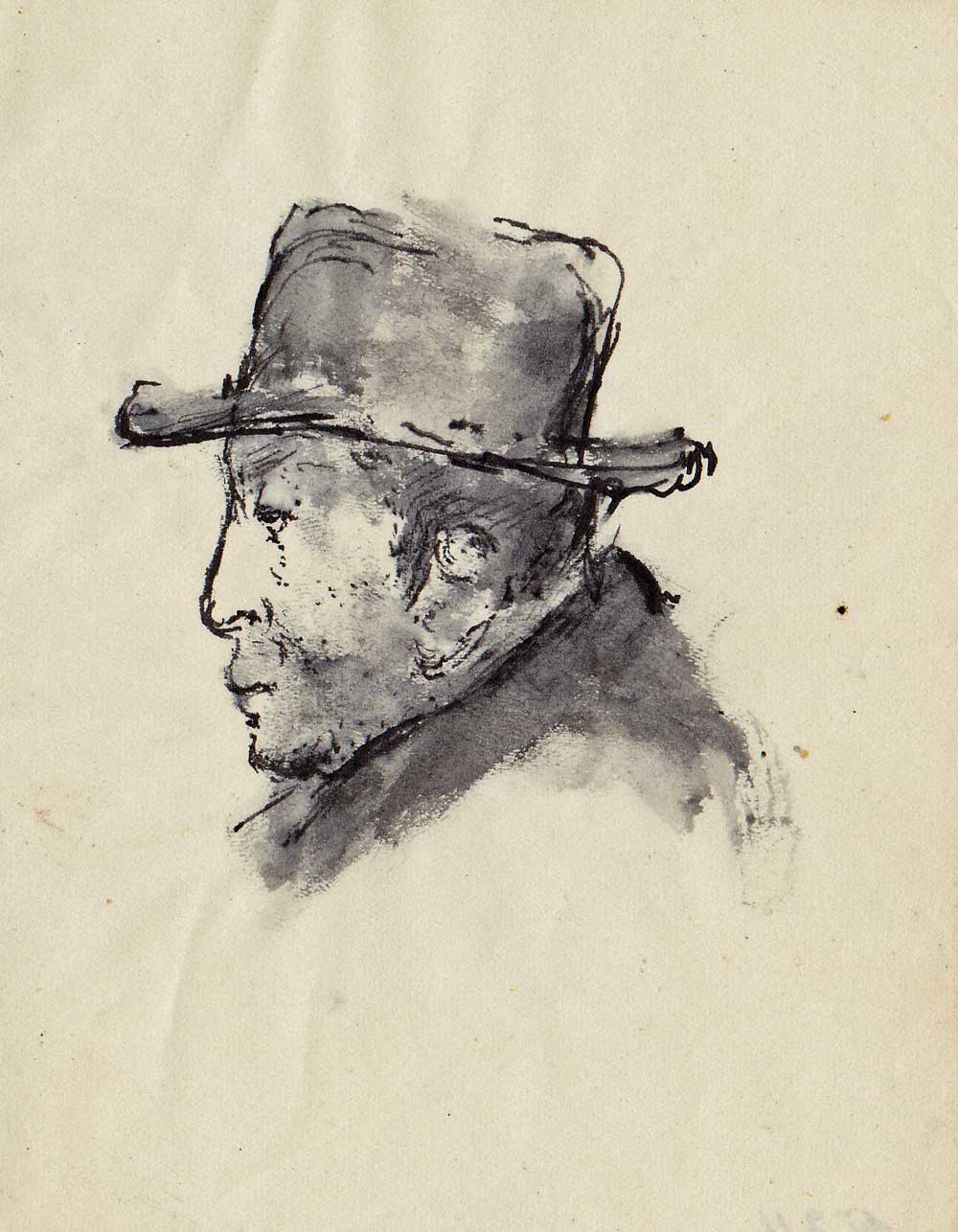
Refugee (aka Man in Hat, Profile Facing Left)
by Eva Frankfurther